When manufacturers aim to enhance the operational performance and health of CNC machines (especially high-speed tapping machines), they need to comprehensively consider several key variables. Among these, the adaptability of processing materials and the optimization of lubrication systems are particularly critical. A proper lubrication solution not only serves as the foundation for ensuring stable equipment operation but also acts as a key factor in improving machining accuracy and extending tool life—its importance far outweighs other auxiliary links.
The lubrication system of a high-speed tapping machine mainly consists of two core types of lubricants: one is the metalworking fluid (cutting fluid) that acts directly on the cutting surface, and the other is the “behind-the-scenes lubricant” that provides auxiliary lubrication for internal mechanical structures. The selection of these two types of lubricants directly determines the equipment’s operational efficiency and service life. Using an inappropriate metalworking fluid can lead to catastrophic consequences, as it not only shortens tool life but also directly affects the surface finish and dimensional accuracy of products. Similarly, the matching degree of drilling speed, feed parameters, and processing materials must be optimized in conjunction with the lubrication solution to maximize production efficiency.
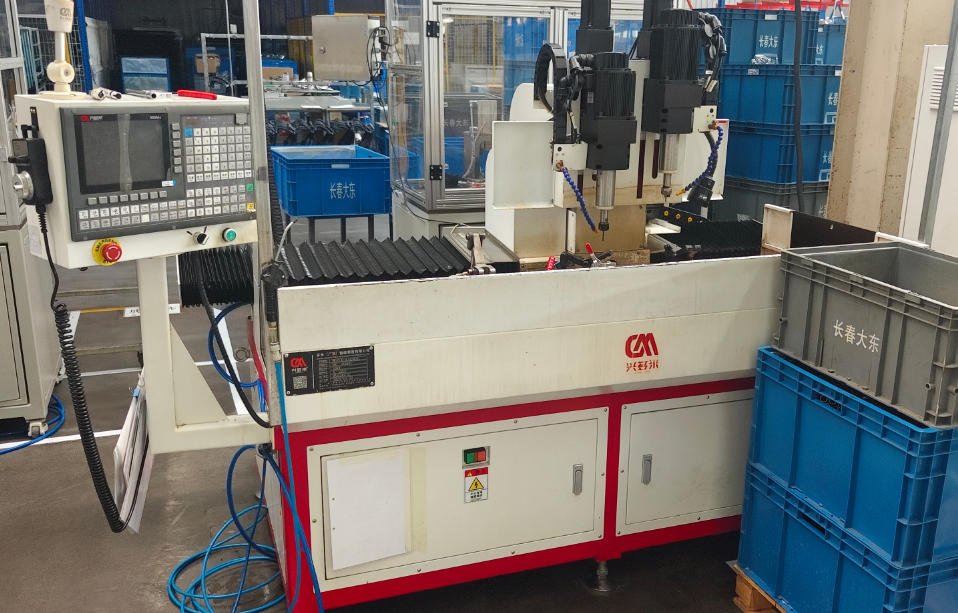
When processing metal materials such as aluminum, steel, and titanium, chip accumulation and built-up edge (BUE) are common challenges. These materials tend to experience chip welding during the cutting process. This causes excess metal chips to break off during cutting and re-weld onto the cutting tool, a phenomenon driven by extremely high temperatures and friction. This can quickly result in cutting tool damage or prevent the tool from achieving desired outcomes (such as low-quality products and increased maintenance). However, such issues can be avoided by using a suitable metalworking fluid tailored to the specific operation and material.
Lubrication enables the tool to cut more smoothly, reducing heat generation and friction while facilitating chip removal. Although tool coatings are designed to be applied on tools and provide some lubrication, they are brittle and cannot solve fundamental problems. Moreover, mist or flood-applied metalworking fluids alone are insufficient to address these challenges.
Beyond preventing BUE and reducing heat and friction on tools, lubricants offer numerous additional benefits. Overheating of tools significantly accelerates wear and causes tool dulling, which may even lead to complete tool deformation. As the name suggests, cooling fluids play a crucial role in cooling the tool during the cutting process. The right coolant, matched to the material and process, helps extend the tool’s service life.
While metalworking fluids are generally the most effective lubricants for high-speed tapping machines, post-service tool coatings can also provide some of the same benefits. Sending tools out for these protective coatings is a service that yields substantial returns. For instance, aluminum oxide coatings can help reduce cycle times while improving tool life, feed rates, and cutting speeds.
Lubricants are not only used to reduce machine downtime and friction; they also play a vital role in enhancing the performance of high-speed tapping machines. We consulted with several experts in the lubrication field, who openly discussed the role of lubricants in improving the performance of high-speed tapping machines.
Computer Numerical Control (CNC) machines automate machine tools by executing preprogrammed sequences of machine control commands via a computer. This differs from machines controlled manually via handwheels or levers, or those with only mechanical automation through cams. A specific component may require the use of multiple different tools, such as drills and saws. Modern machines typically integrate multiple tools into a single “unit.” In other setups, multiple different machines are used in conjunction with external controllers and human or robotic operators to move components between machines.
Guideway Oil
Shedding light on the role of guideway oil, Kanike stated, “Poorly formulated guideway oil may not separate easily from water-based coolants.” Consequently, if oil streaks form, the resulting tramp oil impairs coolant effectiveness by shortening the coolant’s useful life and adversely altering cutting performance. He added, “Tramp oil also promotes bacterial growth, leading to foul odors, shortened service life, and potential health and safety hazards.”
High-quality guideway oil should possess excellent coolant separability (to enhance the performance and lifespan of water-based metalworking fluids), superior friction properties (to improve machine accuracy and reduce chatter), and anti-slip functionality.
Water-Soluble Cutting Fluid
“To boost productivity, it is essential to select technologically advanced water-based coolants. The highest-performance coolants resist biological degradation, thereby reducing maintenance requirements and extending batch service life,” experts noted. The ease of maintenance requires a balance between performance and protection of high-speed tapping machine components against corrosion and sticky deposits.
Furthermore, the fluid should comply with the latest health and safety regulations, and be easy to monitor and maintain. Collectively, these characteristics help extend service life, ensure excellent cutting performance, and minimize maintenance downtime.
Neat Cutting Oil
Neat cutting oils (or straight cutting oils) are used in applications that exceed the typical performance range of water-based coolants, such as tapping and threading of high-alloy steels. “With excellent cutting performance, reduced tool wear, and enhanced surface finish, they improve the machining performance of high-speed automated machining centers,” industry professionals explained.
Spindle Oil
Spindle oil is used in high-speed spindle bearings and equipment involving high speeds and small clearances. It delivers excellent lubrication performance for tight-tolerance bearings, helping to keep the bearings cool and maintain the precision required by many critical pieces of machinery today. According to company specifications, Mobil Velocite oils are high-performance products primarily used for lubricating high-speed spindles in machine tools. They are also used in certain critical hydraulic systems, circulation systems, and air line oilers where the appropriate viscosity grade is selected.
Conclusion
For most high-speed tapping machine operations, metalworking fluids are essential to ensure the highest quality of cutting and end products, while also helping to maximize machining efficiency. The effective use of the right lubricants enables manufacturers to fully leverage the potential of high-speed tapping machines.

huangjiafeng
请到「后台-用户-个人资料」中填写个人说明。