During the installation and commissioning of CNC drilling machines, strict adherence to standard operating procedures is essential to ensure stable equipment performance and safe operation. The following are specific precautions to be observed:
Installation Phase
Foundation installation must be strictly controlled. The bearing capacity of the foundation must meet the equipment’s parameter requirements, with flatness deviation controlled within 0.1 mm/m. After the equipment is positioned, use a leveling instrument to inspect the horizontal and vertical directions of the workbench surface. Adjust the shims to achieve a horizontal accuracy of 0.02mm/m. Simultaneously, use a square ruler to verify the verticality between the columns and the workbench, ensuring an error of ≤0.03mm/1000mm.
Electrical system connections must be standardized. The power supply voltage must be stable within ±5% of the rated value, with a frequency deviation not exceeding ±1Hz. The grounding resistance should be less than 4Ω. When wiring, distinguish between power lines and signal lines to avoid cross interference. Cable joints must be securely crimped and properly insulated. After connection, use a multimeter to test continuity and insulation resistance (≥1MΩ).
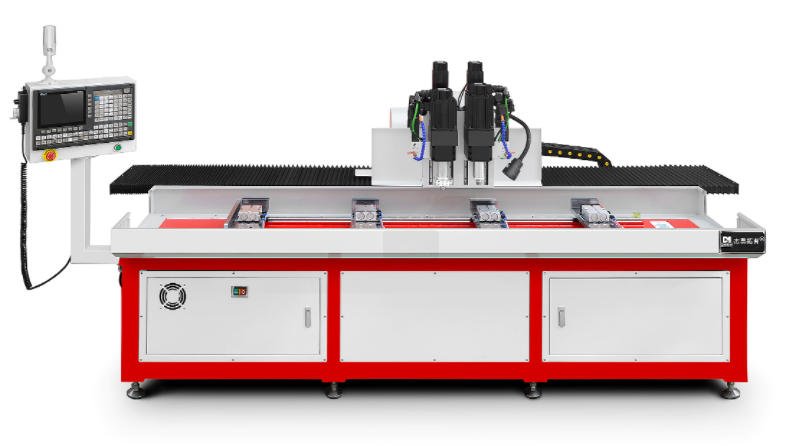
Mechanical component inspections must not be overlooked. Check the preload of all fastening bolts and tighten them using a torque wrench as specified in the manual. Moving components such as guide rails and lead screws must be cleaned and protected. Inspect the lubrication system, add the specified type of lubricating oil, ensure the oil passages are unobstructed, and confirm that safety components such as limit switches and emergency stop buttons function reliably.
Commissioning phase
Empty running tests must be conducted in stages. First, perform point-to-point operations on each axis to check if the movement direction aligns with the instructions and if speed adjustments are smooth. Then conduct continuous operation to observe if any components produce abnormal noises or vibrations, and if temperature rise is normal (motor housing temperature ≤60°C). The running time must be no less than 30 minutes.
Precision commissioning requires precise measurement. Use a laser interferometer to measure positioning accuracy and repeatability, ensuring compliance with equipment grade standards (typically positioning accuracy ≤0.01mm, repeatability ≤0.005mm). If deviations exceed specifications, adjust using parameter compensation functionality, while calibrating spindle speed and feed rate, with errors controlled within ±2%.
Test cutting operations should be conducted progressively. Select standard test blocks for drilling tests. During the first piece processing, use lower parameters (spindle speed at 50% of the rated value, feed rate at 30%) to check hole diameter accuracy, hole position deviation, and surface roughness. Gradually increase the parameters to the rated values, continuously process 5–10 pieces, and confirm dimensional stability. After trial cutting, clean the chips and inspect the tool wear condition.
Safety precautions
Installation and commissioning personnel must wear safety goggles, anti-slip shoes, and other personal protective equipment. Do not open the safety door or touch moving parts while the equipment is running. Set up warning signs during commissioning, provide fire extinguishing equipment, and immediately press the emergency stop button if any abnormalities occur. After cutting off the power supply, troubleshoot the issue. Do not perform repairs while the equipment is energized.

huangjiafeng
请到「后台-用户-个人资料」中填写个人说明。